The practice, in essence.
A primer for anyone beginning, or anyone who wants to understand what they're committing to. No marketing, no shortcuts. The honest map of the journey.
What restoration actually is.
Foreskin restoration is the gradual expansion of penile shaft skin through sustained, gentle tension. The biology underneath is simple: living skin responds to mechanical tension by producing new cells through mitosis, ordinary cell division. The same principle drives the tissue expansion used in reconstructive surgery. Stretch the skin consistently, day after day, and the body grows more of it.
The practice does not regrow lost nerve endings or recreate the specific structures of the original foreskin. What it does, with time, is restore coverage, and with coverage, the comfort, glide, and sensitivity that come from keeping the glans protected as nature intended.
What it asks of you is the longest, quietest commitment most men will make: small, daily acts of tension and patience, repeated for months and years.
The CI stage scale.
The Coverage Index (CI) is the community-standard way to track progress. It runs from CI-1 (no slack skin at all) to CI-10 (a long, fully covering foreskin). It's not a clinical tool, it's a shared language for restorers to talk about where they are. Each level is anchored to a description of how the skin behaves both soft and erect, and restorers often use half-steps and in-between numbers to place themselves.
- CI-1. No loose skin on the shaft when soft; skin tight when erect.
- CI-2. Some loose skin that wrinkles over the sulcus when soft; still tight when erect.
- CI-3. Skin covers the sulcus and just reaches the corona when soft.
- CI-4. Skin covers the corona with most of the glans exposed when soft.
- CI-5. Skin covers part of the glans, with roughly a half to two-thirds exposed when soft.
- CI-6. Skin covers most of the glans when soft.
- CI-7. Full flaccid coverage; the glans is fully covered when soft.
- CI-8. Full coverage with minor overhang when soft.
- CI-9. Clear overhang past the glans when soft; full coverage when erect.
- CI-10. A considerable amount of overhanging skin; overhang persists even when erect.
Seven milestones.
The CI numbers are a fine ruler, but most restorers feel progress in qualitative shifts. These are the seven markers restorers most often point to:
i. Slack skin
The first sign of progress. New skin that wasn't there before becomes available, often noticed as added wrinkling behind the corona and skin that gathers a little when soft. It's subtle, and it's the moment the practice starts working.
ii. Holding a device
Enough slack accumulates that a device or retainer will stay seated on its own. Tugging stops being something you hold by hand and becomes something you can wear, which is what makes the hours add up.
iii. Rollover
Skin can be rolled forward over the glans. At first it springs back; over time it stays put for longer and longer stretches. A major functional shift, and the first time coverage feels real.
iv. Flaccid coverage
The glans is covered when soft, on its own, without effort or holding. Most restorers consider this the single biggest milestone, the point the original goal of restoration is essentially met.
v. Dekeratinization
With the glans consistently covered, the toughened, keratinized surface it developed after circumcision begins to soften. The glans becomes smoother and more sensitive. This is driven by coverage, not by tension, and continues over many months.
vi. Erect coverage
Coverage holds through an erection, not just when flaccid. This takes considerably more skin than flaccid coverage and marks the late stage of the work.
vii. Overhang
Skin extends past the glans and stays forward on its own. From here the work shifts from growing skin to refinement, fine-tuning the amount and balance of tissue to your own preference.
Inner skin and outer skin.
The skin you are restoring isn't one tissue, it's two, and they behave differently.
Outer skin
The shaft skin you see. Tougher, keratinized, designed to live exposed. This is the tissue most restoration methods grow, because most methods apply tension by pulling outward on existing shaft skin.
Inner skin, the mucosa
The thinner, softer tissue that lined the original foreskin and rested against the glans. It is the tissue most responsible for the foreskin's specific qualities: cling against the glans, the protective seal that keeps the glans moist and unkeratinized, the smooth glide during movement.
After circumcision, very little inner skin remains. Restorers working only with outward tension end up with a flap of outer-type tissue covering the glans, coverage, but not the full mechanics of an intact foreskin.
How methods affect each
Outer skin responds well to tugging, weights, and passive forward tension, methods that stretch existing shaft skin away from the body.
Inner skin responds better to dual tension (where force is applied both forward and back against the glans) and air inflation (which expands the foreskin from within). Both stimulate the tissue closest to the glans rather than just stretching the shaft.
Practical guidance
Early in restoration, don't obsess over which tissue you're growing. Put hours in. Once you reach reliable coverage, CI-6 and beyond, pay closer attention. Aim for enough inner skin to roughly match the length of the glans. Significantly more produces a "trumpet" shape that most restorers eventually wish they hadn't pursued.
Active vs. passive methods.
Restoration methods sit on a spectrum from active (high tension, short duration) to passive (low tension, long duration). Both grow skin. They suit different lifestyles, stages, and tolerances.
Active methods
Tugging straps, dual-tension devices, inflation, weights. Generate higher tension for shorter periods. Effective but require attention, you cannot forget about them. Suit focused, hands-on wear and restorers who want to feel the work.
Passive methods
Retainers, O-rings, magnetic plates. Low tension applied for many hours. Effective because of duration, they accumulate hours. Easier to live with, easier to wear under clothing, easier to overdo if you ignore signals.
Most restorers eventually combine both: passive devices during the day, active tugging when they have the time and focus.
Tension & timing.
The community converges around a daily target of 6–8 hours of tension per day, spread across the day. This is not a hard rule, it's a working number that produces results without injury for most people.
How much tension?
The skin should feel stretched, not pinched, not pulled white. If it visibly blanches, you are restricting circulation. If it hurts, you are damaging tissue. Gentle stretch, sustained.
How often?
Daily is better than weekly. Two or three short stretches of wear across a day are better than one long stretch. The body responds to consistency more than intensity.
How long at a time?
Most begin with 30–60 minutes at a time and build over weeks. Once you are well adapted, wear can extend to several hours with passive devices.
Your first wear.
The first time using a restoration device is almost always awkward. You will fumble, readjust, possibly get an involuntary erection at the wrong moment, question whether you're doing it right. All of this is universal. It resolves within a few days as the body adapts.
Before you begin
Read the instructions for your specific device. Wash your hands. Clean the device. Pick a private place with enough time to fiddle without pressure, restoration is not something to rush in five minutes between meetings.
The first wear itself
- Keep it short. Fifteen to twenty minutes is enough. You are learning the mechanics, not making restoration progress yet.
- Tension below what you think it should be. Most beginners apply too much. If you can feel a stretch but the skin colour is normal and nothing pinches, you are correct.
- Plan to readjust. The device will slip, shift, or feel wrong. Removing and reseating is part of learning your own anatomy, not a failure.
- End deliberately. Remove gently, let the skin recover for a few minutes, and assess: was anything red, numb, or sore? Make a note for next time.
The first two weeks
Do not chase hours. Do not add tension. Build the habit first, same time of day, same place, same routine. Once the practice is automatic, you can extend duration and refine tension. Restorers who skip this step and front-load aggressive wear almost always plateau or injure themselves by week three.
What's normal
- Mild redness during wear that resolves within an hour.
- Awkward fit during the first week as you learn your anatomy.
- The skin "remembering" the position after a few wears, it gets easier.
- Involuntary erections, especially in the first few days. They pass.
What's not
- Sharp pain at any point. Stop.
- Numbness, cold sensation, or pale/blanched skin. Remove immediately. Do not reapply until full sensation has returned.
- Bleeding, broken skin, or torn tissue. Rest until fully healed; reflect on what went wrong before resuming.
- Redness still visible several hours later. Reduce tension and duration next time.
Listening to the body.
Your skin will tell you what it needs. The signs to act on, immediately:
- Pinching pain. Tension is wrong, reposition or reduce.
- Whitening or pale skin. Circulation is restricted. Remove and wait until colour returns before adjusting.
- Numbness or cold sensation. Remove immediately. Restore full sensation before reapplying, at much lower tension.
- Redness or irritation that persists past the wear. Reduce wear time and tension. Rest 1–2 days.
- Any tearing, bleeding, or broken skin. Stop. Rest until fully healed. Reflect on what went wrong before resuming.
Plateaus & rotation.
Every restorer hits plateaus, periods where progress seems to stop. They are normal and almost always temporary. The most reliable way through them is method rotation: change the stimulus.
If you have been tugging for months, switch to a retainer for a few weeks. If you have been wearing passive all day, work in active inflation. The skin adapts to whatever you do consistently. Surprise it.
A realistic timeline.
Restoration is measured in years, not months. Typical ranges, with significant individual variation:
- Months 1–6. Slack skin appears, wear tolerance builds, and a device begins to hold on its own.
- Months 6–18. Rollover develops; skin starts to stay forward over the glans for longer stretches.
- Year 2–4. Flaccid coverage becomes consistent; with the glans covered, dekeratinization sets in and sensitivity improves.
- Year 3–7. Erect coverage and overhang develop; the work shifts to refinement.
Some restorers move faster, some slower. Skin elasticity, age, starting CI, and consistency all matter. None of these are reasons to push harder, they're reasons to be patient.
How the four Priva devices compare.
Every Priva device applies tension a different way. Here is the full system side by side.
|
Tugger
Priva
|
Packer
Priva
|
Air
Priva
|
Duo
Priva
| |
|---|---|---|---|---|
| Method | Tugging | Packing | Direct air inflation | Dual tension |
| Mechanism | Soft TPU tugger held forward over the glans | Skin packed onto the device body and held by a gripper | Bulb pump and one-way valve inflate the cone | Ratcheting spring-loaded rod applies tension in two directions |
| Best for | Getting started · CI-0 to CI-2 | Building a daily habit · CI-1 to CI-5 | Controlled inflated wear · any stage | Experienced · CI-3 and beyond |
| Wear pattern | Short 20–30 min wears | All-day discreet wear | Inflated wear, build up over time | Longer progressive wear |
| What is included | TPU tugger | Packer body, four grippers | Dual-cone body, pump, valve, four grippers | Bell, ratcheting rod, tension indicator, gripper |
| Price | Dhs. 196.00 | Dhs. 157.00 | Dhs. 333.00 | Dhs. 588.00 |
| View Tugger → | View Packer → | View Air → | View Duo → |
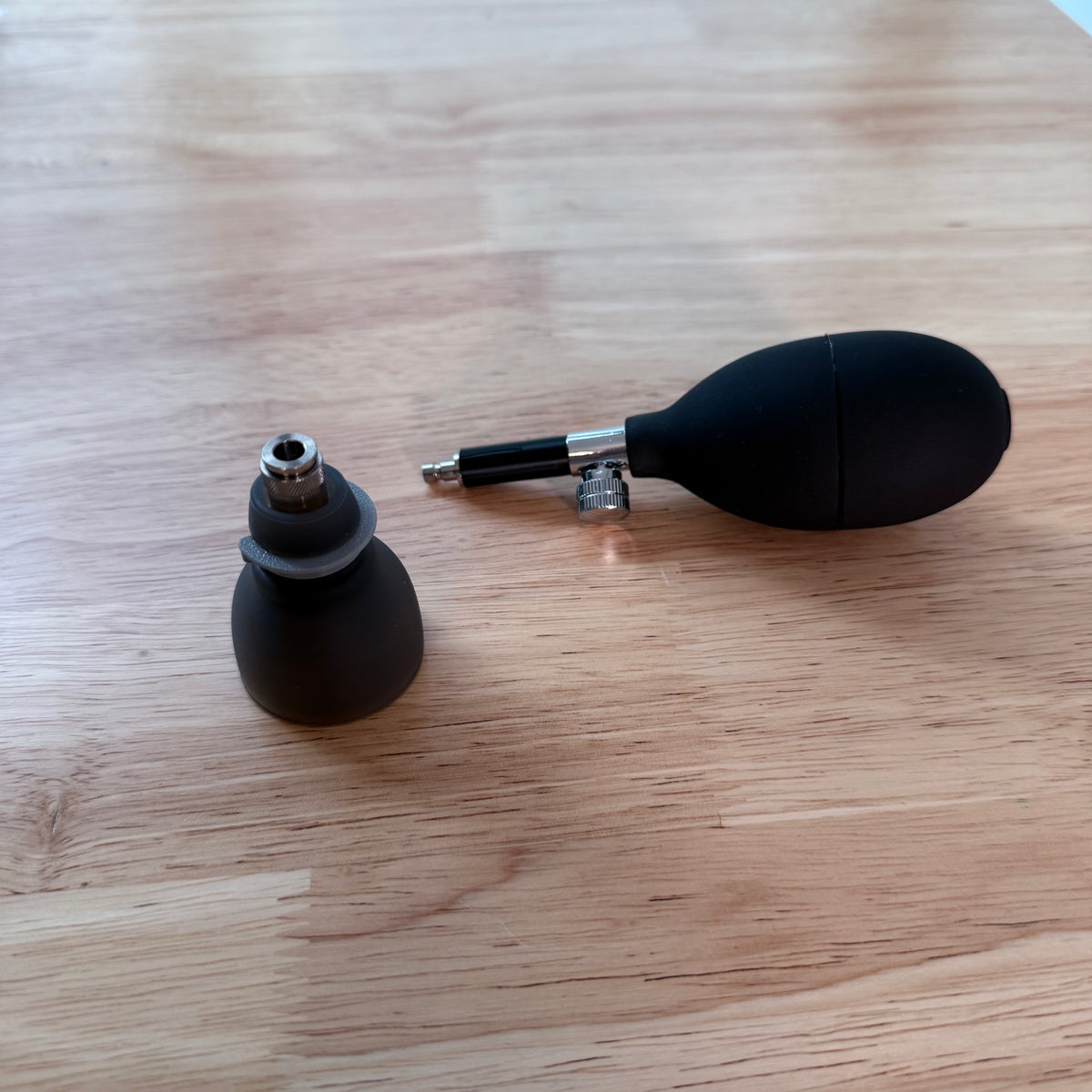
Priva Air
Direct Air - Designed for efficiency and control, the Priva Air lets you add air exactly where you want it, for a steady, adjustable fit. Quick Connect Valve...
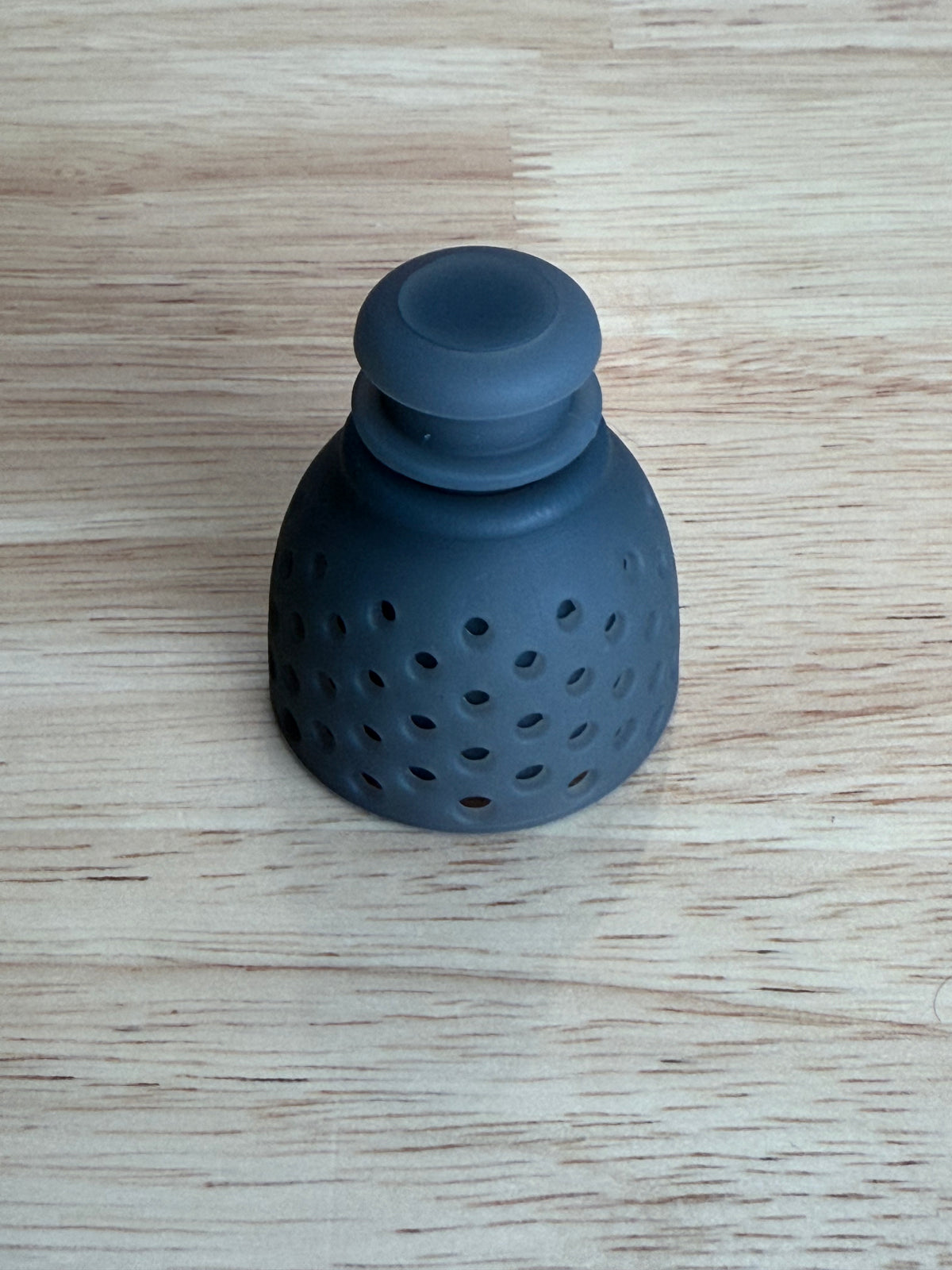
Priva Packer
Magnetic Retainer - One device, two uses. Wear it as a tugger or as a packer, depending on your routine. Four Grippers Included - Comes with firm 45A...
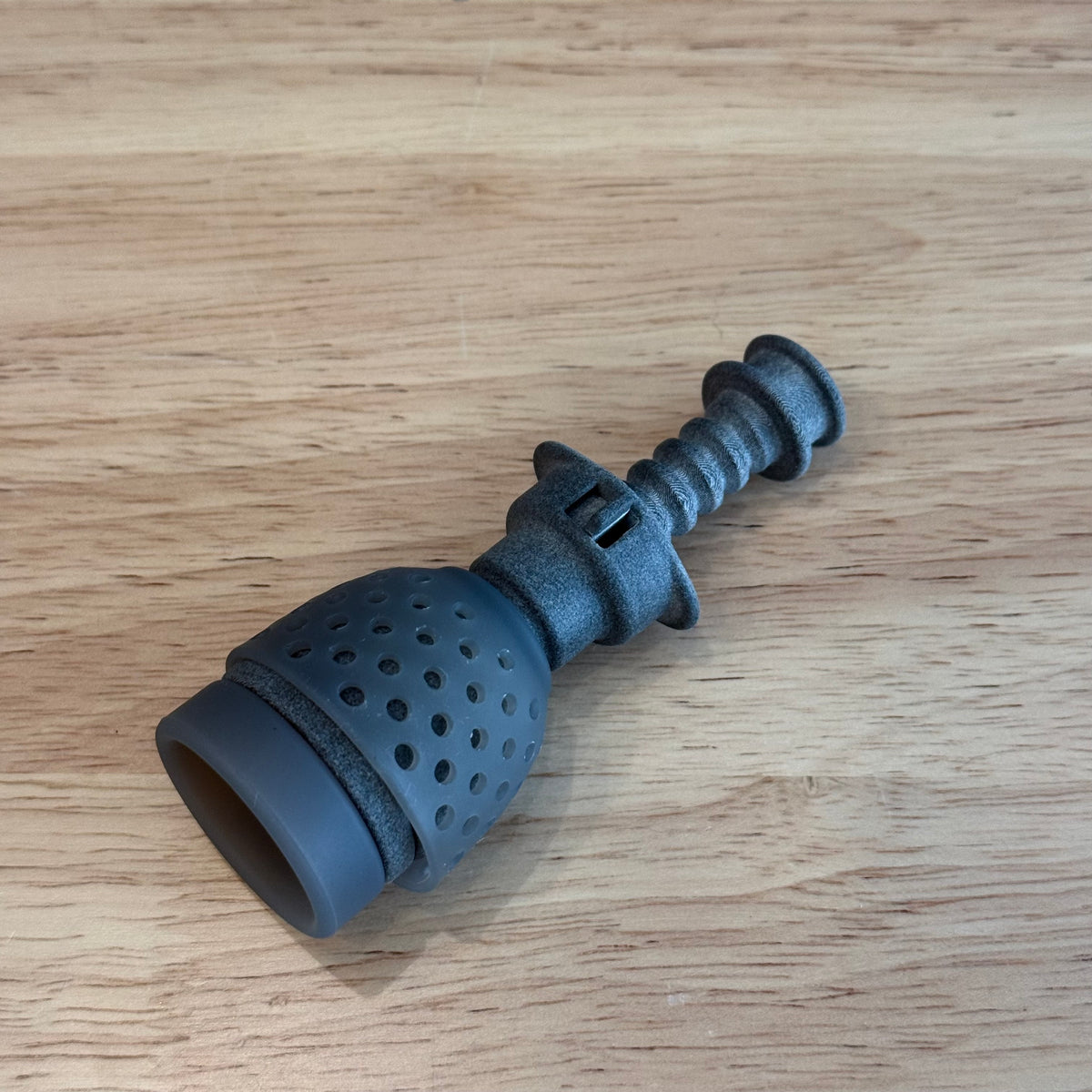
Priva Duo
Dual Tension - A packer that pushes and pulls at the same time, for steady tension in both directions. Adjustable Tension - Set the tension to the level...
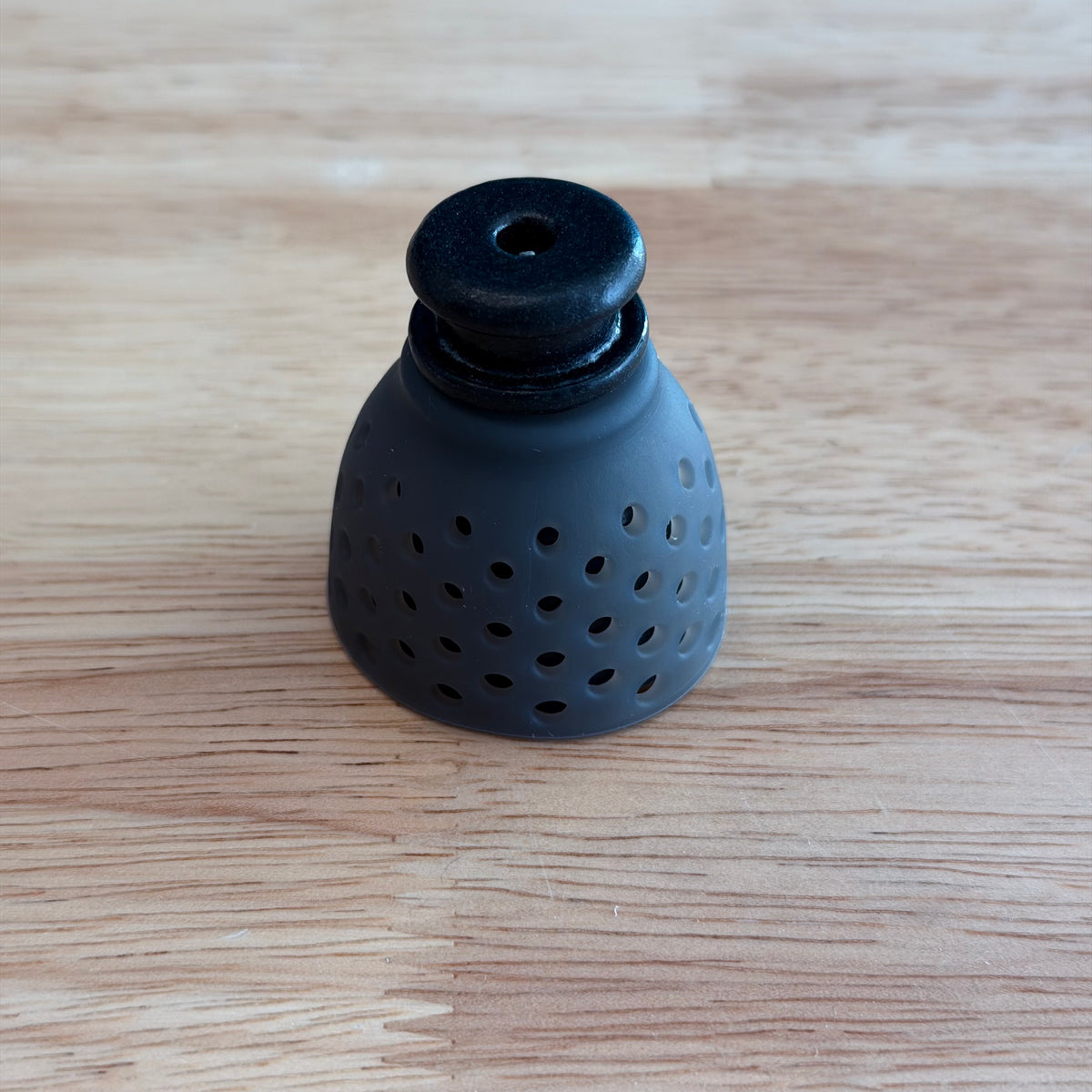
Priva Tugger
Micro-Texture TPU - A finely textured TPU surface gives the gripper a secure hold, so the Tugger stays in place during use. Swappable Grippers - Grippers swap in...
Not sure where you fit? Take the selection guide →